

WordPress Development Services
From building a new website to improving an existing one, we tailor our services to your requirements.

Custom WordPress Development
When standard themes and plugins fall short, we build custom features, page templates, and content structures around your business needs.

WordPress Theme Development and Customization
We customize existing themes or develop custom themes to match your brand, layout, and website functionality.

Custom WordPress Plugin Development
If existing plugins cannot meet your requirements, we develop custom functionality without adding unnecessary dependencies to your website.

WooCommerce Development
We build WooCommerce stores with the product pages, checkout functionality, payment integrations, and store features your business needs.

API and Third-Party Integrations
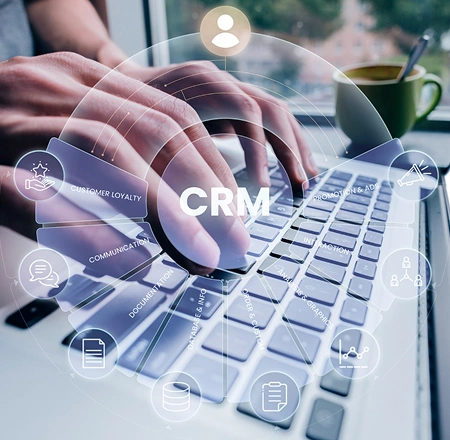
Connect WordPress with compatible CRM platforms, payment services, and other business software. APIs and webhooks can help exchange data and reduce manual work.
WordPress Redesign and Migration
We update existing websites or plan migrations around your content, URLs, functionality, and integrations. Where needed, migration planning includes redirects and checks to protect search visibility.

WordPress Maintenance and Support
Keep your website updated and manageable after launch. Depending on your agreement, maintenance may include software updates, backups, troubleshooting, compatibility checks, and technical improvements.
What Can WordPress Development Improve?
The right development work should solve practical problems, not add complexity.
Website performance:
Address issues related to images, scripts, plugins, caching, and inefficient code.
Custom functionality:
Build features that standard themes and plugins cannot provide.
Business integrations:
Connect compatible systems to reduce repetitive tasks and improve data exchange.
Content management:
Organize page templates and content fields so your team can handle routine updates more easily.
Future improvements:
Use maintainable code and suitable structures to make future changes easier to manage.
The approach depends on your existing website, technical setup, and business priorities.
Performance, Security, and Technical SEO
We consider the technical foundations that affect how people use your website and how your team manages it.
Performance: Review loading speed, image delivery, caching, and code efficiency to identify opportunities for improvement.
Security: Apply appropriate development practices, access controls, and software maintenance. Hosting, configuration, and ongoing updates also affect security.
Technical SEO: Account for crawlable navigation, URL structure, metadata, indexing settings, and structured data where appropriate.
Accessibility and usability: Consider responsive layouts, clear navigation, readable content, and keyboard-friendly interactions.
These practices support a technically sound website, but they cannot guarantee specific rankings, performance scores, or conversion rates.

How Does Our WordPress Development Process Work?
We define the requirements and deliverables before development begins, so you know what the project involves.
1. Requirements and discovery
We discuss your business goals, target audience, required features, and existing website, if applicable.
2. Scope and planning
We agree on the pages, functionality, integrations, responsibilities, and timeline. Any technical dependencies are identified before work starts.
3. Development and integration
We implement the agreed design and functionality using an appropriate WordPress setup. This may include custom themes, plugins, WooCommerce features, or external integrations.
4. Testing and launch
We check the website against the agreed requirements, including relevant forms, navigation, integrations, responsive layouts, and migration tasks.
5. Handover and support
We prepare the website for launch and provide the agreed handover or post-launch support. Ongoing maintenance and additional development can be arranged according to your needs.
The timeline depends on project complexity, content readiness, integrations, and approval times.

What Determines WordPress Development Cost?
Your budget depends on the work required, not just the number of pages. Key factors include:
Design
Existing theme customization or a custom design.
Functionality
Standard features or more complex custom development.
Integrations
External systems and their technical requirements.
Content and migration
Content preparation, transfer, URL changes, and redirects.
Testing and support
Deployment, quality checks, and ongoing maintenance.
Depending on the project, we can discuss fixed-scope development, ongoing support, or dedicated development capacity, subject to availability. Before work begins, your proposal should clarify deliverables, revisions, timelines, support, and third-party expenses such as hosting, premium plugins, and subscriptions.
Frequently asked questions
A theme may be enough for a straightforward website. A developer can help when you need custom functionality, integrations, design changes, or technical improvements that standard options cannot provide.
Custom development gives you more control over functionality, content structures, and integrations. It is most useful when it solves a specific business need that existing themes or plugins cannot adequately address.
Costs depend on the design, functionality, integrations, migration requirements, and support included. Share your requirements to discuss the project scope and estimate.
The timeline depends on complexity, content readiness, integrations, testing, and approval times. We establish a schedule after reviewing the project requirements.
Yes, depending on its current setup and condition. Work may include redesign, theme customization, new features, performance improvements, integrations, or migration.
Yes, where compatible interfaces and access are available. Integrations may use APIs, webhooks, or suitable plugins, depending on the systems and data involved.
Share your business goals, required features, design preferences, budget, and timeline. If you already have a website, include its URL and explain what you want to improve.